Using SDG-aligned equities to build retirement resilience
Related links
Read the full 2025 Responsible Investment Report
South Africa’s responsible investing conversation has evolved. The debate is no longer about whether ESG, transformation or sustainability should be considered, but about how investment intent is translated into repeatable, investable systems that support long-term retirement outcomes while contributing to real world progress.
Aligned with Regulation 28 and FSCA guidance, SDG aligned investing focuses on integrating financially material environmental, social and governance risks into long term investment decision making. When embedded within an Investment Policy Statement (IPS), this approach supports consistency across portfolios and manager mandates, while preserving diversification, liquidity and return objectives. The outcome is not values based investing at the expense of performance, but improved portfolio resilience in the long term interests of members.
Shared challenges, different outcomes
South Africa faces persistent inequality, unemployment and structural poverty. These are challenges shared by many developing economies. Yet international experience shows that capital allocation choices matter. Bangladesh’s development trajectory illustrates how purpose driven financial innovation, notably through micro finance, of which Grameen Bank are a leader, expanded access to opportunity and helped lift millions out of poverty. While often framed as a social intervention, the innovation was fundamentally financial: redefining “bankability” to unlock entrepreneurship at scale, particularly for women.
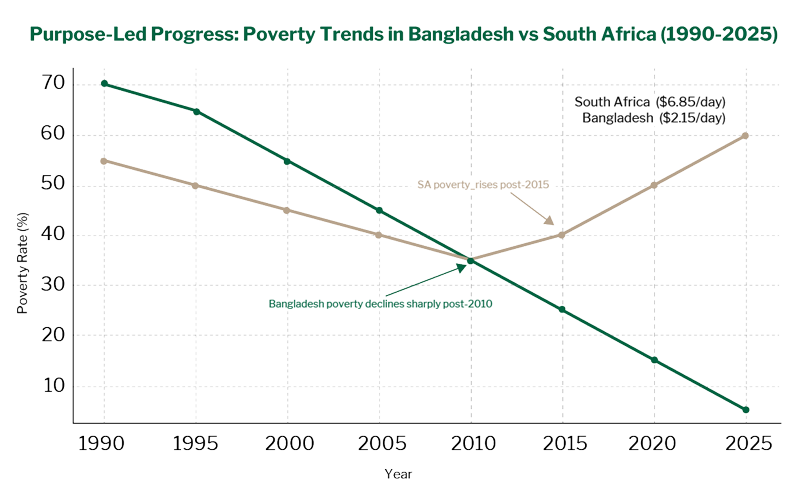
Source: World Bank Poverty and Equity Data Portal, Bangladesh Bureau of Statistics (BBS), Statistics South Africa, UNDP Bangladesh Human Development Report, 2025
South Africa’s pension fund industry, with assets of approximately R4.6 trillion, represents a far larger pool of capital and therefore a proportionately larger opportunity. The question is how this capital can be mobilised systematically and at scale, without compromising fiduciary obligations.
Purpose at scale through listed equities
Purpose-led investing is often associated with private markets or concessionary capital. However, listed equities remain one of the most scalable tools available to long-term investors. They offer liquidity and transparency, support effective governance and stewardship, and allow portfolios to adapt as risks and opportunities evolve.
South Africa’s informal economy accounts for an estimated 8% of GDP and remains under served by formal finance. Listed equities can play a meaningful bridging role: banks financing micro entrepreneurs, telecoms enabling digital inclusion, and supply chains supporting township and informal retail ecosystems. Purpose led investing does not require every rand to be impact labelled; it often means investing in listed enablers of inclusive economic participation and tracking that enablement through better data and engagement.
A practical application: Future focused equity investing
A practical expression of this approach is the Nedgroup Investments Multi-Managed Future Focus Equity Fund. The strategy combines style diversification, valuation discipline and explicit transition risk pricing within a single South African equity portfolio.
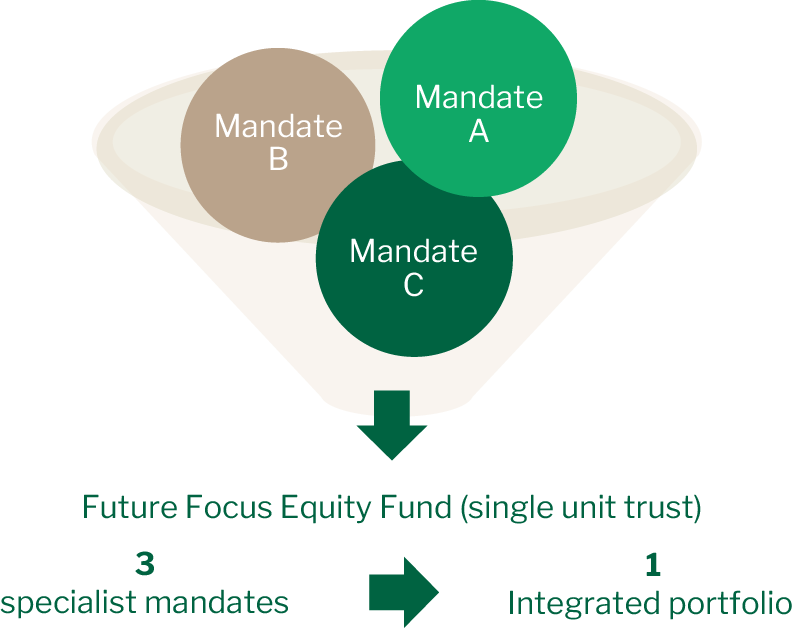
Source: Nedgroup Investments, 2025
Rather than relying on blanket exclusions, the fund engages across the opportunity set, including companies on credible sustainability improvement pathways. In a concentrated market such as South Africa, this approach recognises that transition often delivers better real economy outcomes than divestment.
Purpose is anchored through measurable pillars, notably social equity and climate change. These are linked explicitly to the UN Sustainable Development Goals most relevant to the South African context.
The fund’s stated SDG emphasis includes Gender Equality (SDG 5), Reduced Inequality (SDG 10) and Climate Action (SDG 13).
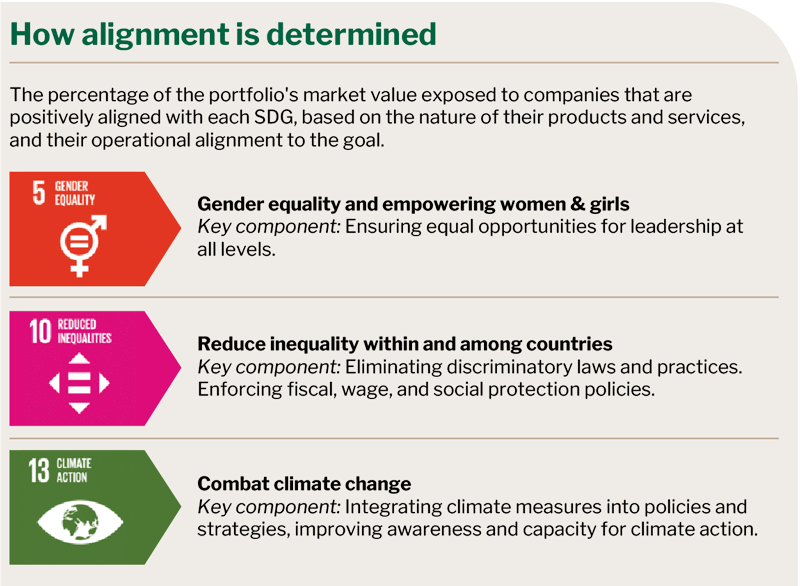
Source: United Nations Sustainable Development Goals, Nedgroup Investments, 2025
Why climate and inequality are retirement risks
• Climate risk is financial risk
Climate shocks feed into inflation, insurance costs, food prices and fiscal stress. Therefore, directly affecting long term purchasing power.
• Inequality constrains growth
High inequality undermines demand, social stability and long term economic growth, weakening the investment environment.
• SDG aligned equities support resilience
By aligning capital with the conditions required for sustainable growth, portfolios are better positioned to deliver durable, long-term retirement outcomes.
From narrative to evidence
A recurring challenge in responsible investing is credibility. Clients and trustees increasingly expect alignment claims to be measurable, comparable and repeatable. SDG-aligned equity analysis shifts the discussion from intent to exposure, using data to show how portfolio holdings contribute through products, services and operational practices.
This approach allows trustees to assess not only whether portfolios align with stated objectives, but how that alignment evolves over time and how it strengthens accountability and reporting quality.
What do we mean by SDG alignment?
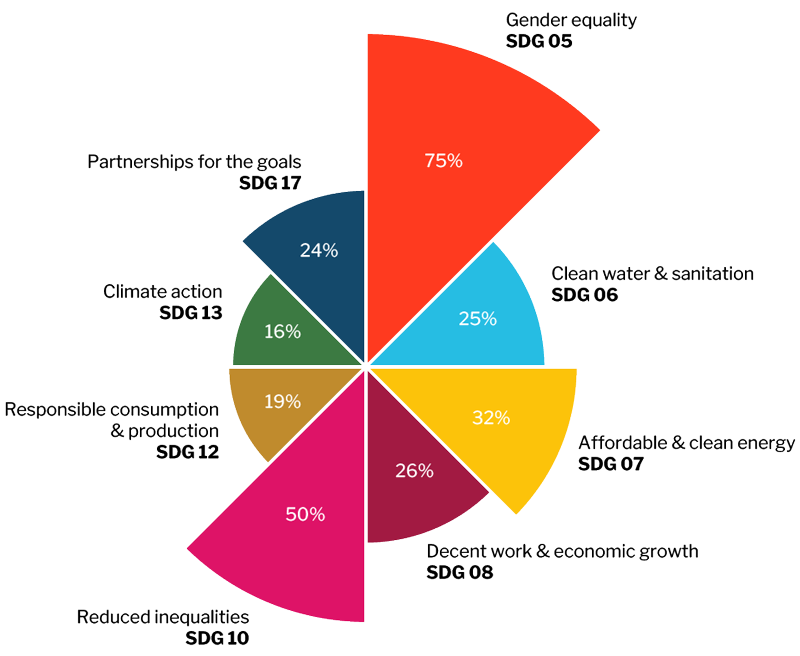
The diagram below illustrates the percentage of the portfolio’s market value exposed to companies that are positively aligned with each SDG, based on products/services and operational alignment. This is important because it shifts the discussion from intent to exposure and evidence.
Therefore, using the SDG alignment snapshot (using MSCI ESG data) provides a tangible view of how that purpose expresses itself in the portfolio. For example, strong reported alignment to SDG 5 (Gender Equality) and meaningful exposures to SDG 10 (Reduced Inequalities) and SDG 13 (Climate Action), among others.
Source: MSCI data, Nedgroup Investments, 2025
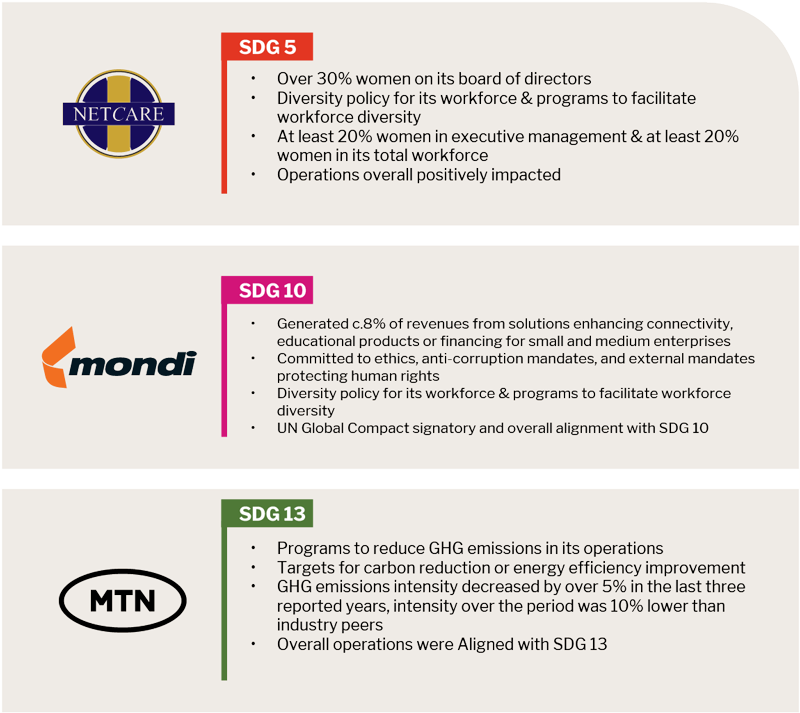
The table below illustrates how this shows up at holding level:
Select aligned holdings
Source: MSCI ESG data; Nedgroup Investments analysis, 2025
Key takeout
Therefore, the objective is not to trade returns for purpose, but to treat purpose as a multiplier of resilience: supporting long term, risk adjusted returns, stronger stewardship, measurable transformation and transparent reporting. Performance and purpose are not competing objectives. When implemented systematically, they reinforce one another.


