Useful lessons for long-term investors from the Formula 1 track
Related links
No related links
At first glance, Formula 1 and investing might seem worlds apart. One is high-speed, high-adrenaline, and measured in milliseconds. The other is often (hopefully!) patient, measured, and focused on long-term outcomes.
However, listening to Ruth Buscombe, Formula 1 Strategy Analyst, at the recently held 2026 Nedgroup Investments Global Investment Summit, it became clear just how much these two worlds have in common - particularly when it comes to using data, making decisions under pressure, and striving for consistent performance.
Here are a few lessons from the track that translate remarkably well into building and managing investment portfolios:
It’s more than just big wins, it’s also about marginal gains
In Formula 1, success rarely comes from a single breakthrough moment, it comes from obsessing over small improvements: a fraction of a second shaved off a pit stop, slightly better tyre management, or more efficient aerodynamics. Individually, these gains may seem insignificant but together, they can mean the difference between first place and the middle of the pack.
Investing works the same way. Long-term performance isn’t typically driven by one “home run” idea. It’s the result of consistent, incremental improvements: disciplined asset allocation, cost efficiency, thoughtful rebalancing, and avoiding unnecessary risks.
It may not feel exciting in the moment but over time, those marginal gains compound. And as any investor knows, compounding is where the magic really happens.
A well-built car (or portfolio) matters
Even the best driver in the world can only do so much with a poorly designed car. In Formula 1, the car is the product of careful engineering and balances speed, reliability, durability, and adaptability to different track conditions.
The same principle applies to investing. A well-constructed portfolio isn’t about chasing the latest trend or the fastest-moving asset, but about building something robust through:
- Diversification across asset classes
- Alignment to your goals and time horizon
- Designed to withstand different market environments
Markets, like race conditions, are unpredictable. And when they change, as they inevitably do, you want a portfolio that can handle the corners, not just the straightaways.
The team behind the strategy makes a difference
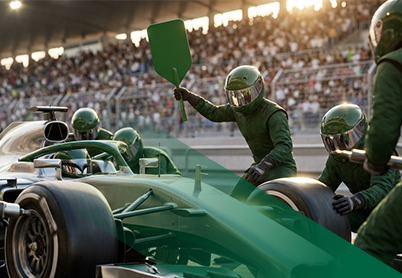
While the driver gets the spotlight, Formula 1 is fundamentally a team sport. Behind every successful race weekend is a coordinated effort between engineers, data analysts, strategists, and pit crews, who each play a critical role (and let’s be honest, a two-second pit stop doesn’t happen by accident).
Investing is no different. Strong outcomes are rarely the result of a single individual. They come from collaboration which sees portfolio managers, analysts, risk teams, and advisers working together, challenging ideas, refining strategies, and making better decisions as a collective.
For investors, this is an important reminder: it’s not just about what you invest in, but who is helping you make those decisions.
Avoiding mistakes is half the battle
In racing, it’s often not just about how fast you are, but also about how few mistakes you make. A missed braking point, a poorly timed pit stop, or a misjudgement on weather conditions can undo an entire race in seconds.
Investing has its own version of these “unforced errors”:
- Chasing performance at the wrong time
- Reacting emotionally to short-term market moves
- Taking on more risk than necessary
- Failing to stay invested through periods of volatility
What’s interesting is that avoiding large mistakes can have as much impact on long-term outcomes as making the right calls. Sometimes, the smartest move is simply not to make the wrong one.
Data matters, but discipline matters more
Formula 1 teams are awash with data - every lap, every corner, every tyre temperature is tracked and analysed in real time - but data alone doesn’t win races. It’s how teams interpret that data and execute decisions under pressure that counts.
The same is true in investing. We have more data than ever before - economic indicators, market forecasts, performance analytics - but successful investing still comes down to disciplined decision-making, clear processes, and sticking to a well-thought-out plan.
It’s the discipline, not data, that ultimately keeps you on track when markets become volatile.
Final lap: Performance is engineered, not hoped for
Perhaps the most powerful takeaway from Formula 1 is this: Winning isn’t accidental. It’s engineered iteration by iteration, decision by decision.
Likewise for investing. Sustainable performance doesn’t come from chasing the next big idea or reacting to every twist and turn in the market. It comes from:
- Building a strong foundation
- Focusing on incremental improvements
- Working with the right team
- Avoiding costly mistakes
- And staying disciplined over time
It may not always feel as exhilarating as a Sunday Grand Prix race, but when it comes to long-term outcomes, it’s a strategy that consistently crosses the finish line.


